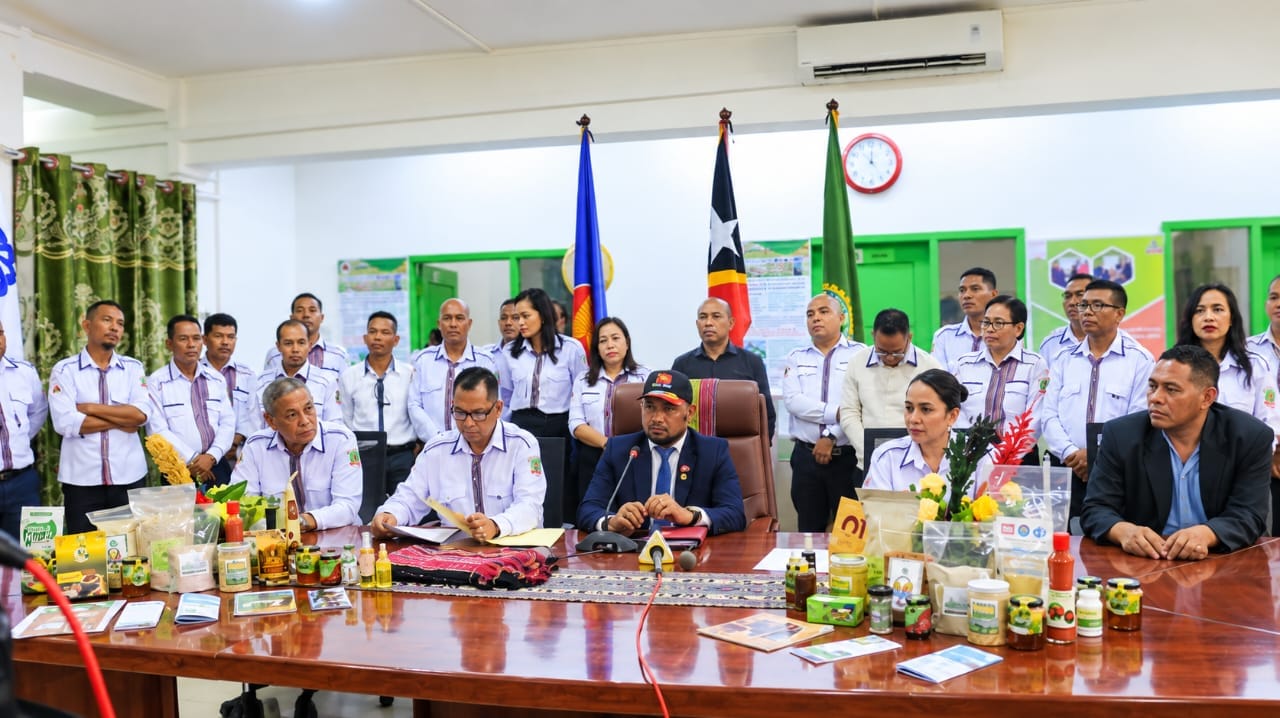
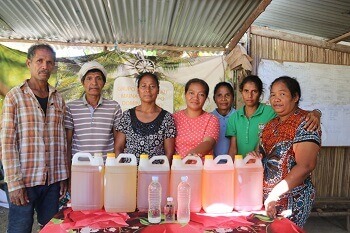
Lafaek News–Timor-Leste has a lot of talented people in its rural areas, such as the beneficiaries of Ai ba Futuru in suco Maina I, post-administrative Lautém, municipality of Lautém. One example is the group, SONAPACAU, which is led by Julia de Sousa (35). The group’s 24 members, both men and women, started processing coconut oil into three types of oil in 2015: cooking oil, virgin oil, and massage oil. SONAPACAU group is different from other groups because they are producing 3 types of coconut oil every day.
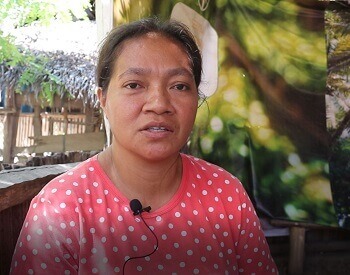
The name SONAPACAU comes from the names of four aldeias in Maina I, Solerese, Nanutero, Pajahara, and Caulitino. At the start each aldeia donated $25 to the group to buy cookware and coconuts for $100. At first, they made only 15 liters per day, but now they make more than 25 liters per day but sometimes depending on the client’s request. Processing of coconut oil is not easy because SONAPACAU produces 3 types of oil, all of them separate, because each of the oils have different quality requirements and the quality of the coconut also has an impact on the processed oil.
The coconuts that the group buys from the community will be separated into 3 parts: one part for virgin oil, one part for cooking oil and the third part for massage oil. Then the nuts are processed in different ways based on the type of oil, but each processing involves cleaning the coconut, cooking and extracting the oil, and packaging. The price starts at $1 for 140 milliliters and ends at $10 for 5 liters depending on the type of oil and its quality. SONAPACAU clients mostly come from Dili, Baucau, and Lospalos.
Although there are challenges in transport,but they aroe able to find a solution on how the oil can reach the client. The proceeds from the sale of oil can reach between $300 or $400 per month. This money is then divided into three parts: $150 is used to buy the coconuts, $60 is reinvested in the business, and the rest is paid out to the group members individually.
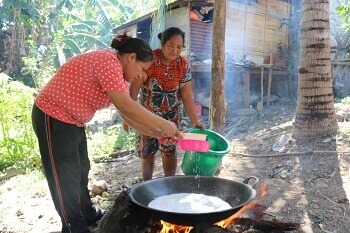
Since joining Ai ba Futuru through trainings provided by the NGO Prospek, they have learned many things, such as how to produce better quality coconut oil, but also gained other skills to diversify the groups activities such as raising ducks, aquaculture, and processing of local food. For these activities, SONAPACAU group now has coconut milling machines, Tofu machines, and the equipment for processing local food such as wok, washbasin, knife etc.
Julia said that the trainings from Ai ba Futuru helped the group to increase their products’ quality and that she is confident that SANAPACAU’s activities will continue. As participating in Ai ba Futuru was a good experience for her and her team members, she also mentioned the group will always be open if another activity will take place in their suco, in order to create new ideas and inspiration.
Since they are involved with all the activities of the Ai ba Futuru project, the team members of SONAPACAU group never have any trouble when it comes to providing food for their families and for paying for the children’s schooling. In the future, Julia and her team is planning to renovate their place to process even more high-quality coconut oil.
The story of SONAPACU in Lautém can be an inspire for other farmers in all municipalities of Timor-Leste to work together and start a business based on their agroforestry products and to create jobs for their own community.