In the lush landscape of Guangxi, China, there is a region that feels as if it transports visitors into another chapter of time. Chengyang Eight Dong Village is not merely a tourist destination, but a living space where nature, traditional architecture, culture, and community life blend in harmony.
Upon entering the village area, the eyes are immediately greeted by a calming natural panorama. Green mountains stretch into the distance, trees grow abundantly, while a flowing river accompanies the life of the community that has continued for generations. The fresh air and atmosphere far removed from the bustle of the city create the impression that time moves more slowly here.
However, Chengyang’s appeal is not only found in its natural beauty. What makes this village truly special is how its people continue to preserve the Dong cultur a heritage that has become an essential part of their lives.
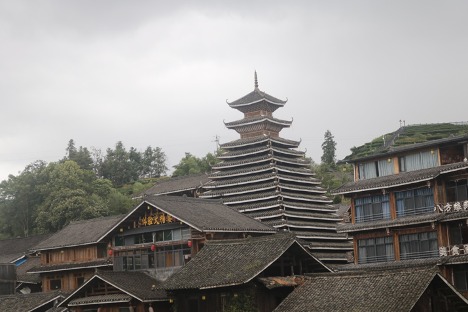
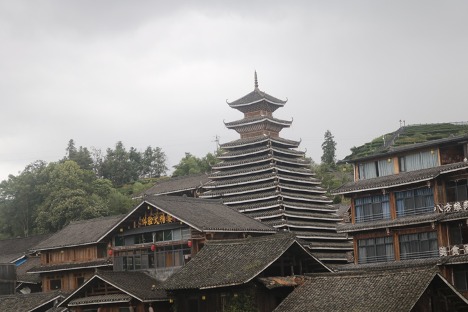
One of the most captivating sights is the row of traditional Dong houses with their distinctive architectural character. Wooden homes stand in forms and structures that reflect the ancestral knowledge of adapting human life to the surrounding environment.
Traditional Architecture That Holds Stories
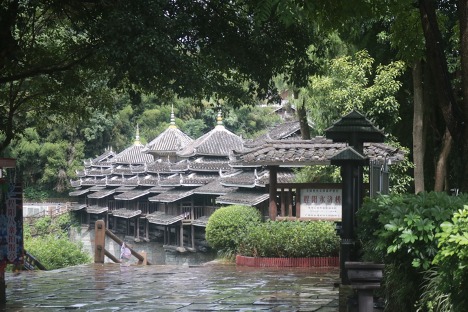
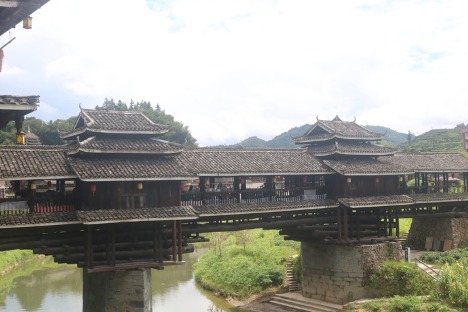
Among these buildings is the Chengyang Wind and Rain Bridge, a traditional bridge that not only serves as a connection between places but also functions as a social space for the community. Its wooden structure and architectural design demonstrate the remarkable craftsmanship of the Dong ancestors.
This bridge seems to symbolize the philosophy of local life: building relationships, connecting people, and creating spaces to meet and share stories.
One of the most impressive aspects of Chengyang Eight Dong Village is how tradition remains present in everyday life.
Dong culture does not exist merely as a performance for tourists. Traditional music, clothing, dances, crafts, architecture, and daily customs are all part of an identity continuously passed down from generation to generation.
Culture That Is Not Just Displayed, but Lived
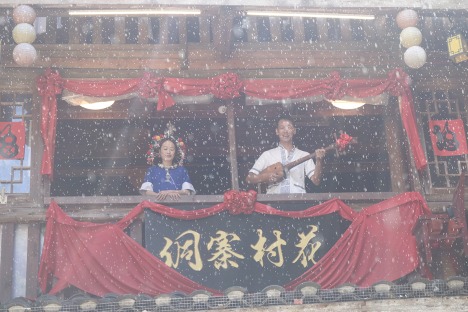
The sound of traditional music echoing between wooden houses creates a unique atmosphere. Tradition is not something stored in a museum; instead, it remains alive and evolves together with the community.
Here, we can see that cultural preservation does not always mean keeping something unchanged. On the contrary, culture can remain alive when people continue to practice it, integrate it into daily life, and pass it on to the next generation.
In addition to nature and traditional buildings, Chengyang also offers another equally fascinating treasure: local handicrafts.
Various ornaments are created with exceptional skill and meticulous handwork. The motifs, shapes, colors, and details in each piece reflect both the creativity and cultural identity of the Dong people.
The Beauty in the Hands of Artisans
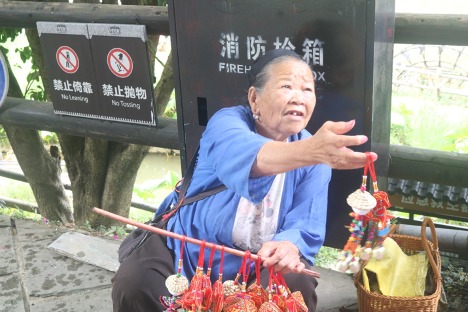
Each craft is not merely an item to take home as a souvenir. Behind a piece of fabric, accessory, ornament, or handmade object lies time, skill, and knowledge inherited from previous generations.
Thus, purchasing a local craft is not just bringing home an object, but also carrying a small part of the story of the people who created it.
Chengyang Eight Dong Village offers a simple yet important lesson: nature and culture do not need to be separated.
Traditional houses stand amid mountainous landscapes. Rivers flow through community life. Bridges become meeting spaces. Music brings the village to life. Handicrafts serve as both creative expression and reminders of identity.
Together, they form a cultural ecosystem in which humans do not merely live within nature, but also build culture based on their relationship with the environment.
When Nature and Culture Become One
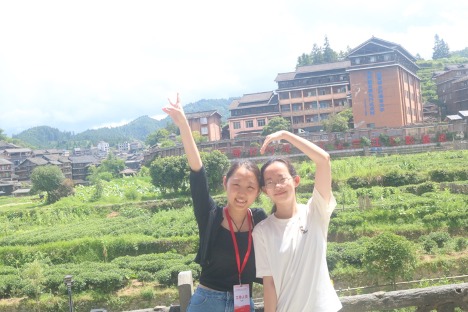
For visitors, a journey to Chengyang is not only about taking photos or visiting beautiful places. It is also an opportunity to see how a community preserves its identity amid changing times.
In the modern era, when maIn the modern era, when many traditions gradually fade and old buildings are replaced by new structures, Chengyang Eight Dong Village demonstrates that modernity and tradition can still coexist.
The village serves as a reminder that progress does not always mean leaving the past behind. Instead, the past can become a foundation for building the future.
Chengyang is not only about wooden houses, bridges, mountains, music, and handicrafts. More than that, it is about identity, memory, and a community’s pride in its ancestral heritage.
A Village, A Heritage
Perhaps that is why a journey to Chengyang feels different. We are not just seeing a village; we are witnessing a culture that is still breathing.
And when the final steps leave the village behind, what remains may not only be beautiful photographs in a camera, but also a deep impression: that in a world moving ever faster, there are still places that teach us to pause, look back and apriciate what has been passed down by previus generation.
By : Paulino Afonso